
SELF CARE – The Complete Guide to Modern Wellness and Personal Balance
What is Self Care in Today’s World?
Self care is not just a trendy phrase anymore—it has become a survival skill in today’s fast-moving lifestyle. At its core, self care means taking intentional actions to improve your physical, emotional, and mental well-being. But in 2026, it has evolved far beyond bubble baths or spa days. It now includes how you think, how you rest, how you eat, how you connect with others, and even how you manage your digital life.
Think of self care like charging your phone battery. If you keep using your phone without charging it, it shuts down eventually. Similarly, if you keep giving energy to work, stress, and responsibilities without recharging yourself, burnout becomes inevitable. That’s why self care is no longer optional—it’s essential.
Evolution of Self Care Concept
Earlier, self care was mainly associated with physical wellness activities like exercise, hygiene, or medical care. Over time, especially after global awareness about mental health, it expanded into emotional and psychological well-being. Now in 2026, self care includes digital detoxing, mindfulness practices, and even short “micro-breaks” during the day that help reset the mind.
Recent wellness studies show people are shifting toward simple, consistent habits instead of complex routines. Instead of long self-care rituals, many now prefer small actions that fit into busy schedules.
Why Self Care is More Than Just Relaxation
A common misconception is that self care means relaxing or doing nothing. That’s not true. Real self care sometimes includes doing difficult things—like setting boundaries, saying no, or seeking therapy. It’s about long-term well-being, not temporary comfort.
Importance of Self Care in 2026
In 2026, self care has become deeply connected with survival in modern life. With increasing stress levels, digital overload, and fast lifestyles, people are realizing that ignoring self care leads to burnout, anxiety, and low productivity.
Mental Health Connection
Mental health awareness has grown significantly. People now understand that stress, anxiety, and emotional exhaustion are not signs of weakness but signals that the mind needs care. Self care helps regulate emotions and improves resilience.
Even short breaks during work or study can improve focus and reduce mental fatigue. Many modern wellness experts recommend small daily habits instead of waiting for burnout recovery.
Physical Health Benefits
Self care also directly affects physical health. Good sleep, proper nutrition, and regular movement help the body function better. Poor self care habits often lead to fatigue, headaches, and low immunity.
A balanced self care routine helps improve energy levels and supports long-term health stability.
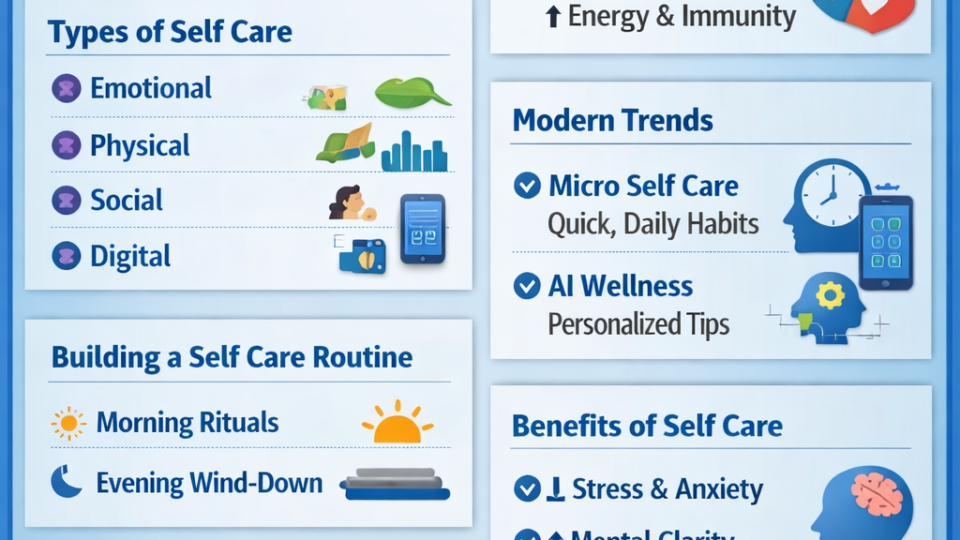
Types of Self Care
Self care is not one-dimensional. It can be divided into several important categories that work together to improve overall well-being.
Emotional Self Care
This includes managing emotions in a healthy way. It involves journaling, talking to someone you trust, or simply acknowledging your feelings without judgment.
Physical Self Care
This focuses on the body—exercise, sleep, hydration, and nutrition. Even small habits like walking daily or drinking enough water fall into this category.
Social Self Care
Humans are social beings. Spending time with supportive friends or family is a powerful form of self care. Healthy relationships reduce stress and increase happiness.
Digital Self Care
In today’s world, digital overload is real. Limiting screen time, unfollowing negative content, and taking social media breaks are essential parts of self care.
Modern Self Care Trends
Self care is evolving quickly with technology and lifestyle changes.
Micro Self Care Habits
One of the biggest trends is “micro self care.” Instead of long routines, people are adopting small actions like 30-second breathing exercises or quick mindful pauses during the day. These small habits help reduce stress instantly and improve focus.
Recent reports show that these short self-care moments can significantly improve emotional balance throughout the day .
Personalized AI Wellness
Another major trend is AI-driven personalization in wellness. Apps and devices now track sleep, mood, and habits to create personalized self care recommendations. This makes self care more scientific and tailored to individual needs.
How to Build a Self Care Routine
Building a self care routine doesn’t need to be complicated. The key is consistency, not perfection.
Morning Routine
A good morning self care routine sets the tone for the day. It can include:
- Drinking water after waking up
- Light stretching or exercise
- Planning your day calmly
- Avoiding immediate phone use
These simple habits help the mind start the day with clarity instead of stress.
Evening Routine
Evenings are for winding down. A healthy evening routine includes:
- Reducing screen exposure
- Reading or journaling
- Light reflection on the day
- Sleeping on time
Good sleep is one of the most powerful self care practices.
Common Mistakes in Self Care
Many people misunderstand self care. Some think it’s about buying expensive products or following influencer trends. But real self care is not commercial—it is personal.
Another mistake is inconsistency. Doing self care only once in a while does not bring real benefits. It must become part of your lifestyle.
Some people also turn self care into pressure, trying to do too many routines. That defeats the purpose. Simplicity always wins.
Benefits of Self Care Practices
Consistent self care brings life-changing benefits:
- Better mental clarity
- Reduced stress and anxiety
- Improved physical health
- Higher productivity
- Stronger emotional stability
It also improves relationships because a healthy mind communicates better and handles emotions more effectively.
Self Care Tips for Busy People
Even if you have a busy schedule, self care is still possible. You don’t need hours—just smart habits:
- Take short breaks during work
- Practice deep breathing for 1 minute
- Eat mindfully instead of rushing
- Sleep on time whenever possible
- Say no when overloaded
Small actions, when done daily, create big results over time.
Expert Opinions on Self Care
Wellness experts now emphasize that self care is no longer optional—it is a necessity for modern living. Many psychologists agree that small, consistent habits are more effective than occasional big lifestyle changes.
Experts also highlight that self care should be personalized. What works for one person may not work for another, and that’s completely normal.
Conclusion
Self care is not a luxury or trend—it is a foundation for a balanced and healthy life. In today’s fast-paced world, taking care of yourself is just as important as working or achieving goals. Whether it is emotional awareness, physical health, or digital balance, self care touches every part of life.
The key is simplicity and consistency. You don’t need expensive routines or complex plans. You just need awareness and daily effort. When you take care of yourself, everything else in life becomes easier to manage.
❓ FAQs
1. What is the real meaning of self care?
Self care means taking intentional actions to improve your physical, mental, and emotional well-being.
2. Is self care only about relaxation?
No, it also includes discipline, boundaries, and healthy lifestyle habits.
3. How can I start self care daily?
Start with small habits like drinking water, sleeping on time, and taking short breaks.
4. Why is self care important?
It helps reduce stress, improve health, and increase overall life satisfaction.
5. Can self care improve mental health?
Yes, regular self care significantly improves emotional stability and reduces anxiety.







Leave a Reply